


 Brunches in usa
Regional Classics: Ultimate Food Lover’s Guide to the USA
Welcome to the Ultimate Food Lover’s Guide to the USA, your detailed map to exploring the varied culinary terrain of America. In 2026, the local dining scene keeps growing, mixing old-school roots with new culinary ideas. Every region has a story told through its kitchens.
The food terrain of the United States spans over three million square miles of varied cultural roots and regional ingredients. To help you steer through this vast space, this Ultimate Food Lover’s Guide to the USA highlights the heritage and local twists of classic dishes. Understanding these plates requires looking at the people who first made them.
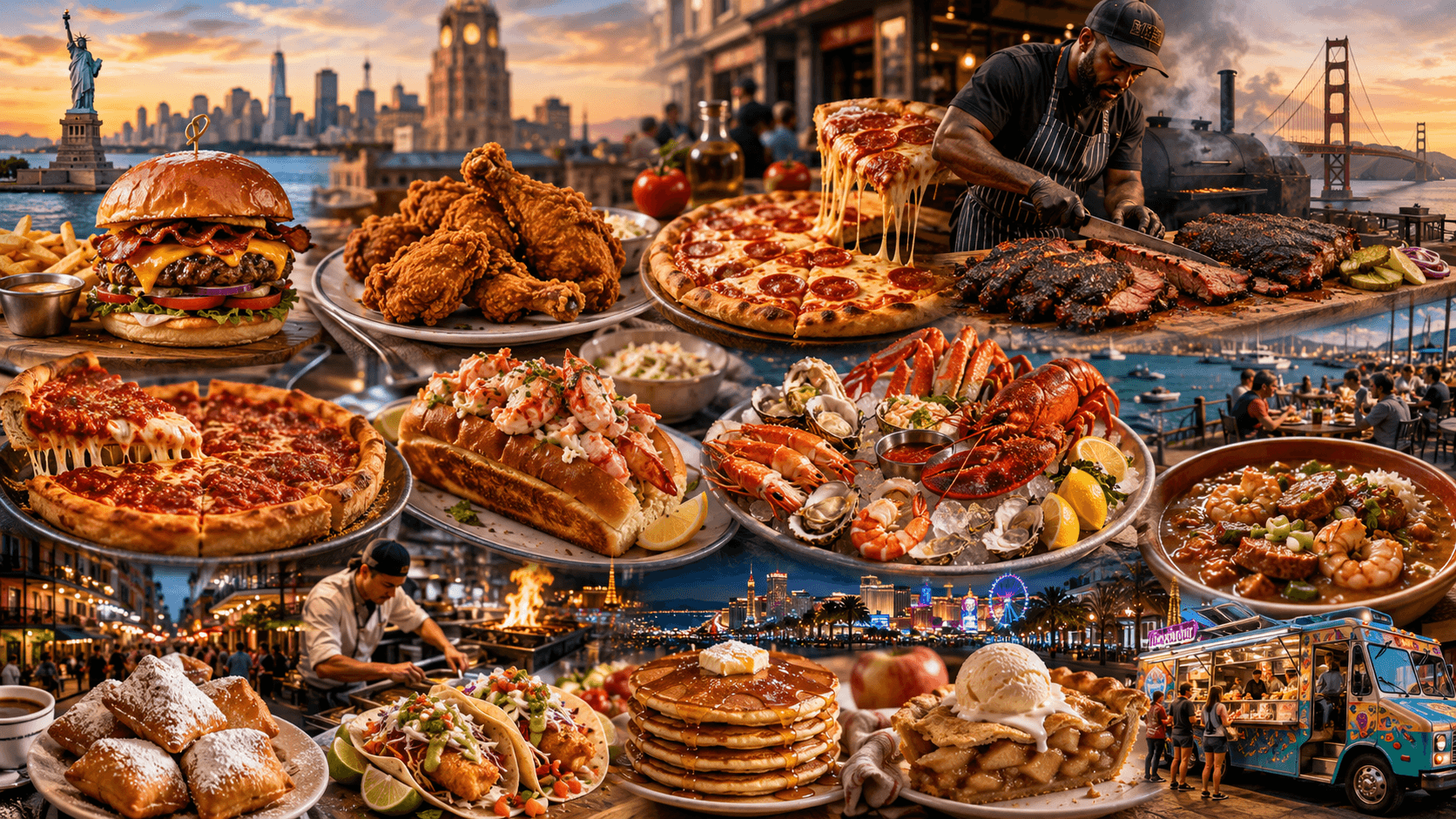
Deep-dish pizza in Chicago stands as a decades-old tradition started by Italian immigrants in the early 1940s. The thick crust acts as a deep bowl for layers of mozzarella cheese, crushed tomatoes, and local sausage. This style stands in stark contrast to the thin, foldable slices found in New York City, which rely on high-gluten flour and local tap water to get their famous chewy bite.
Philly cheesesteaks anchor the street food culture of Philadelphia, Pennsylvania. This famous sandwich combines thinly sliced ribeye beef with melted cheese on an Amoroso roll. You can order it customized with Provolone, American cheese, or Cheez Whiz.
- Chicago Deep-Dish: Expect a baking time of at least forty-five minutes due to the thick layers of ingredients.
- New York Slice: Fold the slice lengthwise to prevent the cheese and oil from spilling.
- Philly Cheesesteak: Order using local lingo like whiz wit to specify Cheez Whiz and onions.
Coastal Seafood Gems and the Ultimate Food Lover’s Guide to the USA
The northeast coast pulls up some of the finest cold-water lobsters on earth. Traditional Maine lobster rolls spotlight sweet claw and knuckle meat served cold with a light coating of mayonnaise in a split-top bun. Let this Ultimate Food Lover’s Guide to the USA lead you to the freshest local catches along these shores, including Connecticut-style rolls served warm with melted butter.
Clam chowder remains a mainstay in Boston, built on a thick, creamy base of heavy cream, potatoes, and salted pork. Moving south to the Gulf Coast reveals a rich heritage of seafood preparation rooted in Cajun and Creole cultures. Louisiana crawfish boils rely on large outdoor pots filled with cayenne pepper, garlic, lemons, corn, and red potatoes.
- Maine Lobster: Look for shacks located directly on the docks to ensure the seafood was caught that morning.
- Boston Chowder: Seek out historical taverns in the Faneuil Hall area for recipes dating back to the nineteenth century.
- Gulf Crawfish: Prepare to eat with your hands and wear protective clothing to avoid staining.
Barbecue Capitals: Ultimate Food Lover’s Guide to the USA
American barbecue spans a broad range of regional smoking techniques, wood choices, and sauce profiles. No food journey would be complete without these smoky flavors. This Ultimate Food Lover’s Guide to the USA showcases the distinct smoking styles of the South.
Texas barbecue centers on beef brisket smoked over post oak wood for up to eighteen hours, seasoned simply with a coarse blend of salt and black pepper. By comparison, Kansas City barbecue uses a wide variety of meats. They finish their plates with a thick, sweet sauce made from tomatoes, molasses, and brown sugar.
Carolina barbecue divides into eastern and western styles, both focusing on slow-cooked pork. Eastern North Carolina uses the whole hog seasoned with a tangy vinegar, cider, and red pepper sauce. Western style uses only the pork shoulder and adds tomato paste to the vinegar mixture.
- Central Texas: Meat is sold by the pound on butcher paper without any sauce.
- Kansas City: Burnt ends represent the highly prized caramelized tips of the beef brisket.
- Carolinas: Coleslaw is served directly inside the pulled pork sandwich to balance the acidity.
| Style | Primary Meat | Key Flavor Profile |
|---|---|---|
| Texas Barbecue | Beef Brisket | Smoky, savory post oak, simple salt and pepper rub |
| Kansas City Barbecue | Pork, Beef, Chicken | Sweet and thick tomato-molasses sauce, hickory smoke |
| Carolina Barbecue | Pork (Whole Hog or Shoulder) | Tangy vinegar-based sauce, light red pepper heat |
Street Food Culture and the Ultimate Food Lover’s Guide to the USA
The West Coast of the United States led the modern food truck wave and Asian-American fusion cooking. Exploring these lively trucks and stalls is a key part of the Ultimate Food Lover’s Guide to the USA experience. Los Angeles displays this blending through the mixture of Korean barbecue flavors into traditional Mexican tacos.
San Francisco bakes its own claim to fame with the Mission burrito. This massive flour tortilla comes packed with rice, beans, meat, salsa, and guacamole, wrapped in aluminum foil to keep the whole thing from falling apart. Southern California also offers the fish taco, influenced by the coastal cuisine of Baja California, featuring beer-battered white fish, shredded cabbage, and a creamy lime sauce on a corn tortilla.
Future Trends: Ultimate Food Lover’s Guide to the USA
Current high-end dining stresses seasonal, farm-to-table menus that honor local soil. Restaurants in the Pacific Northwest use wild-foraged mushrooms, cedar-planked salmon, and local berries to create unique regional stories. They shake hands directly with local growers to get rare heirloom ingredients.
Chicago and New York serve as hotbeds for culinary science and experimental tasting menus. These multi-course meals push kitchen boundaries by altering familiar textures and temperatures. Responsible farming practices have changed the daily routines of top-tier restaurants, with chefs preferring zero-waste kitchens.
As we look ahead in 2026, the growth of American cooking keeps moving forward, shaped by responsible sourcing, new kitchen tools, and a greater respect for native ingredients. Chefs across the country are reworking what it means to serve authentic American food. They work to ensure the local food scene remains exciting and welcoming.
The Ultimate Food Lover’s Guide to the USA offers a massive spread of flavors waiting to be explored by hungry travelers. Choosing regional specialties ensures a deeper understanding of the cultural heritages that define modern dining.


Comments are closed